Trivia Game - IQ Quiz Test
AppgenerationTrivia
4.661.00 Reviews
- Version
- 1.6.0
- Installs
- 100.00K
- Age Rating
- Everyone
Screenshots
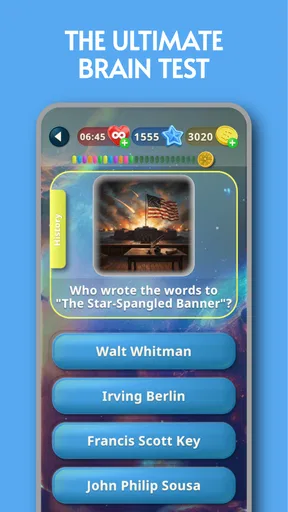
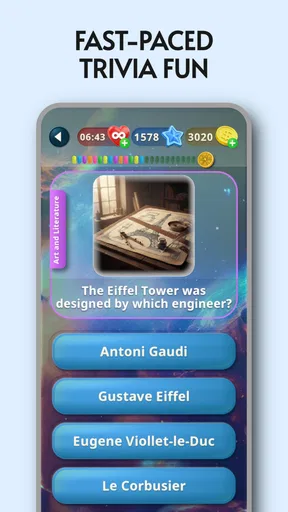
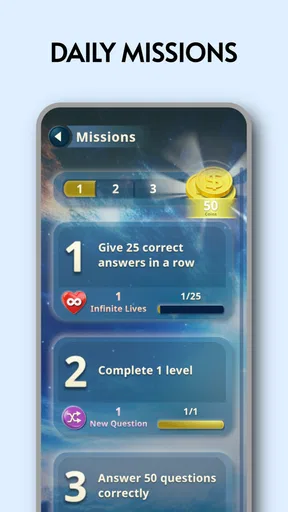

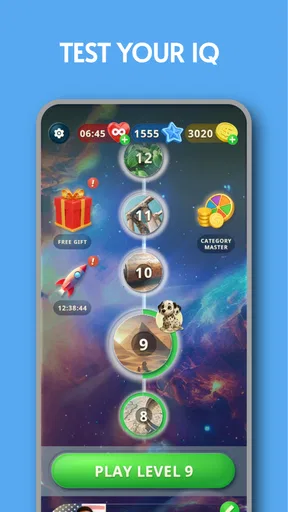
Our Review of Trivia Game - IQ Quiz Test
 Analysis by Appyee
I like trivia games that let me start thinking immediately, without asking me to learn a complicated system first. Trivia Game - IQ Quiz Test takes that straightforward route: it presents itself as a quiz-focused game from Appgeneration, built around answering questions and testing how sharp I am. It is free to download, aimed at Everyone, and belongs to the trivia side of mobile gaming rather than the deeper strategy or story-driven categories.
After spending time with it, my overall impression is that it works best as a quick mental break. I can open it when I have a few spare minutes, answer questions, and leave without feeling that I have started a long commitment. That simplicity is its main appeal, but it also means the experience will not satisfy someone looking for a rich campaign, detailed lessons, or a highly social competition platform.
What the first session feels like
The first thing to understand is the role this game is trying to fill. It is not a replacement for a full educational course, and I would not approach it expecting a carefully structured intelligence assessment. Instead, it is a casual trivia experience where the pleasure comes from recognizing an answer, making a good guess, or noticing how a question catches me out.
That distinction matters because the phrase “IQ quiz” can create expectations that are too serious. I treat the result of any individual question as a game moment, not as a scientific measurement of intelligence. My score reflects familiarity, attention, wording, and sometimes simple luck. With that mindset, the game becomes more enjoyable and less frustrating when a question lands outside my knowledge.
The store summary focuses on answering trivia questions and proving how smart I am, but the practical value is broader. I can use it as a warm-up before studying, a small challenge during a commute, or an easy activity to share with someone nearby. The format is also suitable for a quick handoff to a family member because the content rating is Everyone.
Appgeneration has kept the basic idea accessible. The current release is version 1.5.0, and the game has already reached over one hundred thousand installs, with an average rating of 4.6 from around one thousand ratings. Those figures suggest that the simple quiz format has found an audience, although they do not change the fact that the best experience depends on whether I enjoy short question-and-answer sessions.
I would especially recommend trying it if you like general-knowledge games but do not want to memorize a large rulebook. It is also a reasonable choice for parents looking for a light, age-appropriate quiz activity, provided they are comfortable treating it as entertainment rather than formal learning. The Everyone rating makes that audience easier to understand, but individual questions can still vary in difficulty, so younger players may need help with unfamiliar subjects.
How I approach the opening questions
My advice to a first-time player is not to rush through the opening screen or assume that every wrong answer means I performed badly. I read the entire question first, identify exactly what it is asking, and only then look at the answer choices. This small habit prevents a common mistake in trivia games: choosing a familiar-looking option before noticing a qualifier in the wording.
I also avoid searching for answers during a normal run. Looking something up may help me get a correct response, but it removes the useful part of the game, which is seeing what I actually know under light pressure. If I am playing with another person, I sometimes make a note of questions that caused disagreement and discuss them afterward. That turns a solitary quiz into a short conversation without requiring a separate multiplayer system.
A realistic everyday use case is a waiting room or a short break between tasks. I can play a few questions, stop when my appointment or work resumes, and return later when I want another mental diversion. This is more convenient than starting a long-form game, where stopping after a few minutes might leave a mission unfinished or interrupt a carefully planned match.
Getting started without overthinking the setup
Because the game is free, the initial decision is uncomplicated: install it, open it, and see whether the question style suits me. The minimum operating-system requirement is 10, so I would check that an older device meets that baseline before expecting a smooth installation. On a compatible Android or iOS device, the important preparation is less about configuration and more about deciding how I want to use the quiz.
If I am playing alone, I keep the first session relaxed and focus on the rhythm of reading, deciding, and learning from mistakes. If I am introducing it to a child or family member, I explain that the goal is not to label anyone as smart or unintelligent. The better goal is to compare reasoning, recall, and curiosity. That framing makes wrong answers feel like prompts for discussion instead of failures.
I would also keep an eye on optional purchases. The game is free, but in-app items range from $0.99 to $9.99 each. I do not consider that automatically negative, yet it is a useful boundary to set before handing a device to a child or letting someone play without supervision. A free download can still include paid choices, so I prefer to decide in advance whether I am willing to spend anything.
One practical tip is to begin with a short, uninterrupted session rather than playing while distracted. Trivia depends on reading carefully, and notifications or conversation can make a fair question feel confusing. A quiet few minutes gives me a better sense of the game’s actual difficulty than repeatedly opening it while multitasking.
Another useful habit is to separate knowledge gaps from wording mistakes. If I miss a question because I have never encountered the subject, that is different from misreading a date, comparison, or negative phrase. Recognizing the difference helps me judge whether I need more general knowledge or simply need to slow down. It also prevents me from blaming the game for every wrong answer.
The first meaningful success
For me, the first meaningful success is not merely tapping the correct option. It is completing a small run with a deliberate process: read, eliminate unlikely answers, commit, and remember what happened. That process gives the game more value than random guessing. Even when I miss something, I can leave the session with a specific fact or a clearer idea of how I approach uncertainty.
When I know an answer immediately, I still pause briefly before selecting it. Trivia questions often test precision rather than broad recognition. A familiar name may appear beside a more exact answer, and the difference can be hidden in one word. This is one of the easiest ways to improve performance without memorizing anything new: answer the question that is written, not the question I expected to see.
For a group session, I find it more interesting to let everyone answer privately before revealing their choices. That avoids the loudest or fastest person influencing everyone else. We can then compare reasoning, especially when two options seem plausible. The game becomes a compact way to start a conversation about history, science, culture, language, or everyday facts.
There is also a useful “confidence check” I apply to myself. Before answering, I silently rate my confidence as high, medium, or low. Afterward, I compare that feeling with the result. Over time, this shows whether I tend to overestimate quick guesses or underestimate answers I actually know. It is a small personal exercise, but it makes a basic quiz feel more reflective.
I would not use the game as the sole basis for judging a child’s ability, an adult’s intelligence, or anyone’s academic potential. A trivia session favors people who have encountered the subjects included in the questions. Someone can be thoughtful and capable while performing poorly simply because the topics are unfamiliar. Keeping that limitation in view is important, especially when playing competitively with people of different ages.
Where new players may feel confused
The biggest possible confusion comes from the title itself. “IQ Quiz Test” sounds more authoritative than a casual trivia game, but I would not interpret a game score as a clinical or standardized IQ result. The experience is better understood as a collection of challenges that test recall, attention, and reasoning in a playful setting.
Another point to keep clear is the difference between difficulty and quality. A question I find obscure is not necessarily badly written, and an easy question is not necessarily unhelpful. I judge each one by whether the wording is understandable and whether the answer can be selected fairly. When I disagree with a result, I revisit the exact wording before deciding that the game made a mistake.
Players may also wonder whether the game is suitable for very young children simply because its age rating is Everyone. I see that rating as a broad indication of accessible content, not a guarantee that every question will match a child’s reading level or background knowledge. For younger players, playing together is the better approach: an adult can explain unfamiliar words and turn difficult questions into learning moments.
The presence of in-app purchases is another area where expectations should be realistic. Since individual items cost between $0.99 and $9.99, I would not give a child unrestricted access to a payment-enabled device. I also would not assume that spending money will make the core experience more satisfying. The main reason to keep playing should be enjoyment of the questions, not pressure to buy something after a mistake or disappointing result.
Some users may ask whether this is better than a traditional quiz app. My answer depends on the intended use. A dedicated educational app is usually the stronger choice when I want a curriculum, explanations, progress tracking, or subject-specific study. A live multiplayer trivia service is more suitable when the main goal is competing with friends or strangers in real time. This game makes more sense when I want a direct, low-commitment quiz experience without building a larger routine around it.
How I decide whether to keep playing
After the first session, I look at three things: whether I enjoy the question variety, whether the difficulty feels motivating rather than exhausting, and whether I can play without feeling pushed toward purchases. If those three points work for me, the game earns a place among my occasional time-fillers. If I need deep explanations or a dependable study plan, I move to a more specialized alternative.
I also pay attention to repetition. Casual trivia games are most enjoyable when questions continue to feel fresh, but any app in this category can become less interesting if I see the same material too often. Rather than playing for a long stretch, I prefer shorter sessions spread across the week. That preserves the challenge and makes it easier to remember which topics I need to revisit.
A good next step is to create a personal review habit. After a session, I write down one question I missed and one question I answered confidently. Later, I try to explain both answers in my own words. This turns the game into a modest learning tool without pretending that it replaces a textbook or course. It is especially effective for players who enjoy collecting interesting facts but struggle to retain them.
For families, I would use the game as a conversation starter rather than a contest with a permanent winner. One person can read a question aloud, everyone can think independently, and the group can discuss why an answer fits. This approach reduces the advantage of speed and gives quieter players room to participate. It also makes the Everyone rating more meaningful in practice because the experience becomes shared and supervised.
For solo players, I recommend setting a simple goal such as improving careful reading or reducing impulsive guesses. Chasing a perfect result every time can make a casual game unnecessarily tense. A goal based on process is more durable: I can succeed by making thoughtful choices even when the subject matter is unfamiliar.
There are clear situations when I would skip it. If I want a story, character progression, strategic planning, or a visually elaborate world, this trivia format will feel too narrow. If I need verified instruction for an exam, I would choose a dedicated study resource. And if I strongly dislike uncertainty or general-knowledge questions, the basic premise will not become more appealing simply because the download is free.
For everyone else, the low barrier is the strongest reason to try it. The game is free to start, supports a broad audience, and focuses on an activity I can understand within seconds. Its rating of 4.6 and more than one hundred thousand installs show that many players appreciate that approach, while the forty-four written reviews provide additional evidence that it has generated discussion beyond silent downloads.
My final view is positive but measured. Trivia Game - IQ Quiz Test is a sensible pick for short, accessible quiz sessions, especially when I want something lighter than a full game and more engaging than passive scrolling. I like that I can turn a few spare minutes into a small test of memory and attention, and I appreciate the option to use it alone or as a family conversation prompt.
At the same time, I keep its limits in mind. It should not be mistaken for a formal intelligence assessment, a complete learning program, or a guaranteed substitute for a social trivia platform. I would install it with a clear expectation: the real success is thoughtful play, not a number that defines how smart I am. With that perspective, Appgeneration’s trivia game is easy to recommend to curious casual players, while serious learners and competitive quiz fans may be better served by more specialized alternatives.
Privacy and Permissions
See what permissions an app requests and how it handles your data.
- Wi-Fi connection information
- view Wi-Fi connections
- Other
- view network connections, full network access, run at startup, control vibration, prevent device from sleeping, Google Play license check, read Google service configuration
Verdict
Strengths of Trivia Game - IQ Quiz Test
- Thousands of trivia questions across multiple knowledge categories.
- Quick rounds make it easy to play during short breaks.
- Difficulty increases gradually as your knowledge improves.
- Score tracking encourages you to replay and beat your best result.
- Simple interface is easy for both children and adults to navigate.
Limitations of Trivia Game - IQ Quiz Test
- Some questions may feel repetitive after extended play sessions.
- A few answers can depend on subjective or outdated information.
- Ads may interrupt the experience between quizzes.
- Advanced players may find the easier levels too predictable.
- Progress can feel limited without more detailed performance statistics.
Other Releases by Appgeneration
View All
Mahjong for Seniors
Board4.6

Bible Trivia and Word Games
Word4.9
Similar Picks in This Category
View All
Millionaire 2026 Quiz & Trivia
Quiz & Trivia Games by Submarine Apps4.5

Brain Test 2: Tricky Stories
Unico Studio4.7

Trivia Crack: Brain Quiz Games
etermax4.4

QuizzLand. Quiz & Trivia game
Quiz & Trivia Games by Mno Go Apps4.8

Brain Test: Tricky Puzzles
Unico Studio4.7

Logo Quiz
bubble quiz games4.5
Frequently Asked Questions
What is Trivia Game - IQ Quiz Test?
Trivia Game - IQ Quiz Test is a quiz-based mobile game designed to challenge your general knowledge, logic, memory, and problem-solving skills. It typically presents multiple-choice questions across subjects such as science, history, geography, entertainment, and everyday facts. The app is suitable for short sessions, making it convenient when you want a quick mental challenge or a casual way to test your knowledge.
Is Trivia Game - IQ Quiz Test suitable for beginners and children?
The game can be enjoyable for beginners because questions are generally presented in a simple quiz format, and players can improve gradually through repeated attempts. However, difficulty may vary considerably between categories and levels. Parents should review the app’s age rating, advertising, privacy information, and question content before allowing children to play, especially if the game includes competitive features or in-app purchases.
Does Trivia Game - IQ Quiz Test require an internet connection?
Whether an internet connection is required depends on the version and features available in the app. Basic question sets may work offline after installation, while advertisements, leaderboards, daily challenges, updates, or online competitions may need mobile data or Wi-Fi. Before downloading, check the store description and test the game with connectivity disabled if offline access is important to you.
Is Trivia Game - IQ Quiz Test free to download and play?
Trivia Game - IQ Quiz Test may be available as a free download, but free access does not always mean that every feature is completely free. Many quiz games use advertisements, optional purchases, premium question packs, or subscriptions. Review the app’s store listing for pricing details, and check the purchase settings on your device if children or other users may access the application.
Does the game really measure intelligence or provide an official IQ score?
A quiz game can be a fun way to exercise memory, reasoning, and general knowledge, but its result should not be treated as a professional intelligence assessment. Scores can be affected by familiarity with the subjects, language, concentration, and the game’s question design. Use the result as entertainment and a personal progress indicator rather than as a certified IQ measurement or psychological evaluation.
Play our best games!


